A11y Playground
A strategy to get C-suite leaders in government agencies to act on web accessibility, built on social psychology rather than further explanation.
The brief
GovTech's A11y Playground had been reaching out to government C-suites with little response. Research split those leaders into two personas: policy-unfamiliar but empowered, and knowledgeable but overwhelmed. Neither was hostile to accessibility; both had it filed under compliance. Below them, most employees had never encountered WCAG 2.2 and read accessibility as a technical problem belonging to somebody else.
The challenge
The instinctive response to low engagement is more information, and it would have changed nothing, because the barrier was never a knowledge gap. The real obstacle was the size of the ask. Making a site fully accessible is large, vague and expensive-sounding, and requests of that shape get deferred indefinitely by people with competing priorities.
How I ran it
- 01Made the first ask deliberately small, using foot-in-the-door: agreement to a minor, easy request measurably raises the odds of agreement to a larger one later, so the opening move was a single step rather than a transformation.
- 02Framed every intervention as low threshold, high impact: minimal effort, cost or commitment, disproportionate result. That is the framing a leader with competing priorities can actually accept.
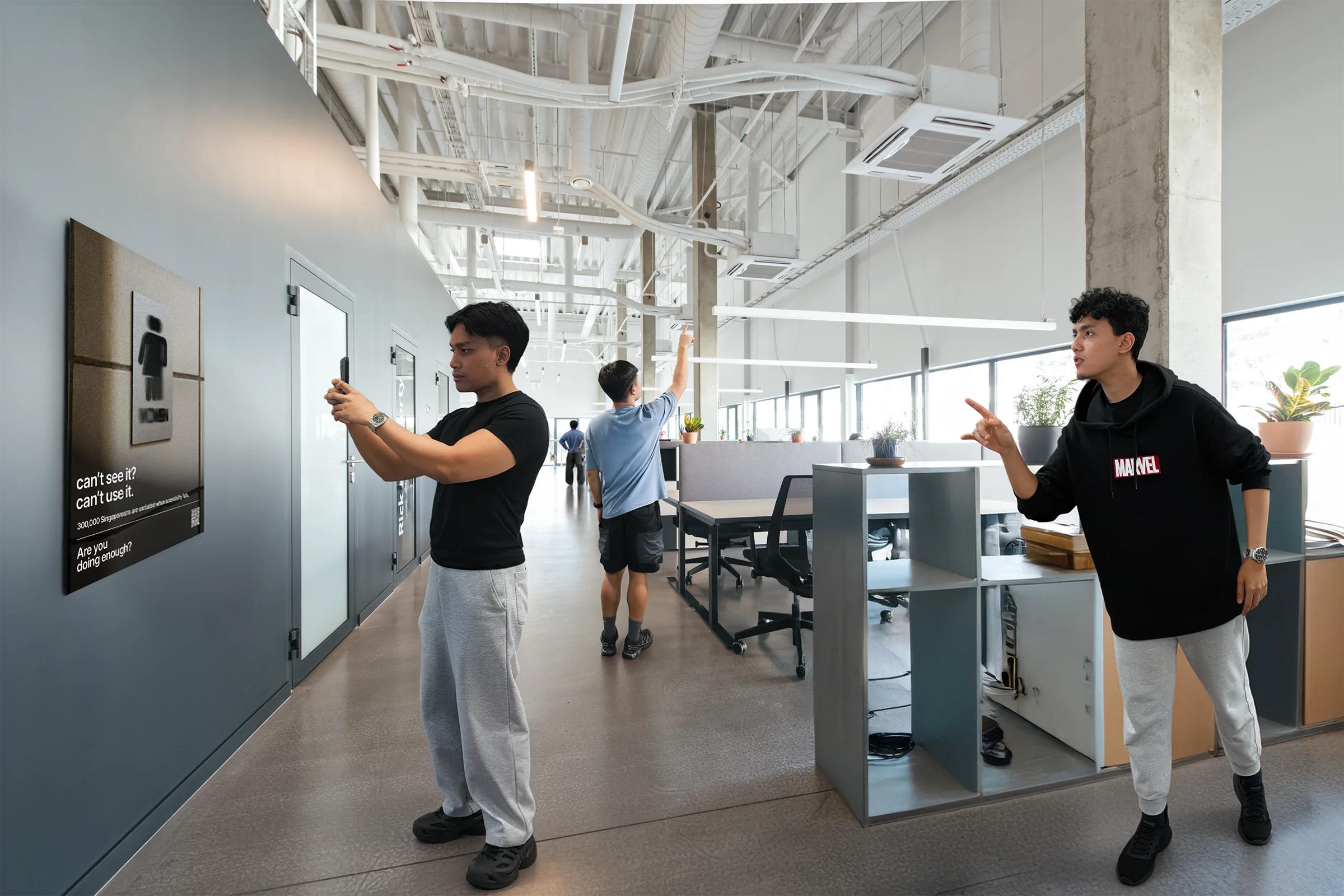
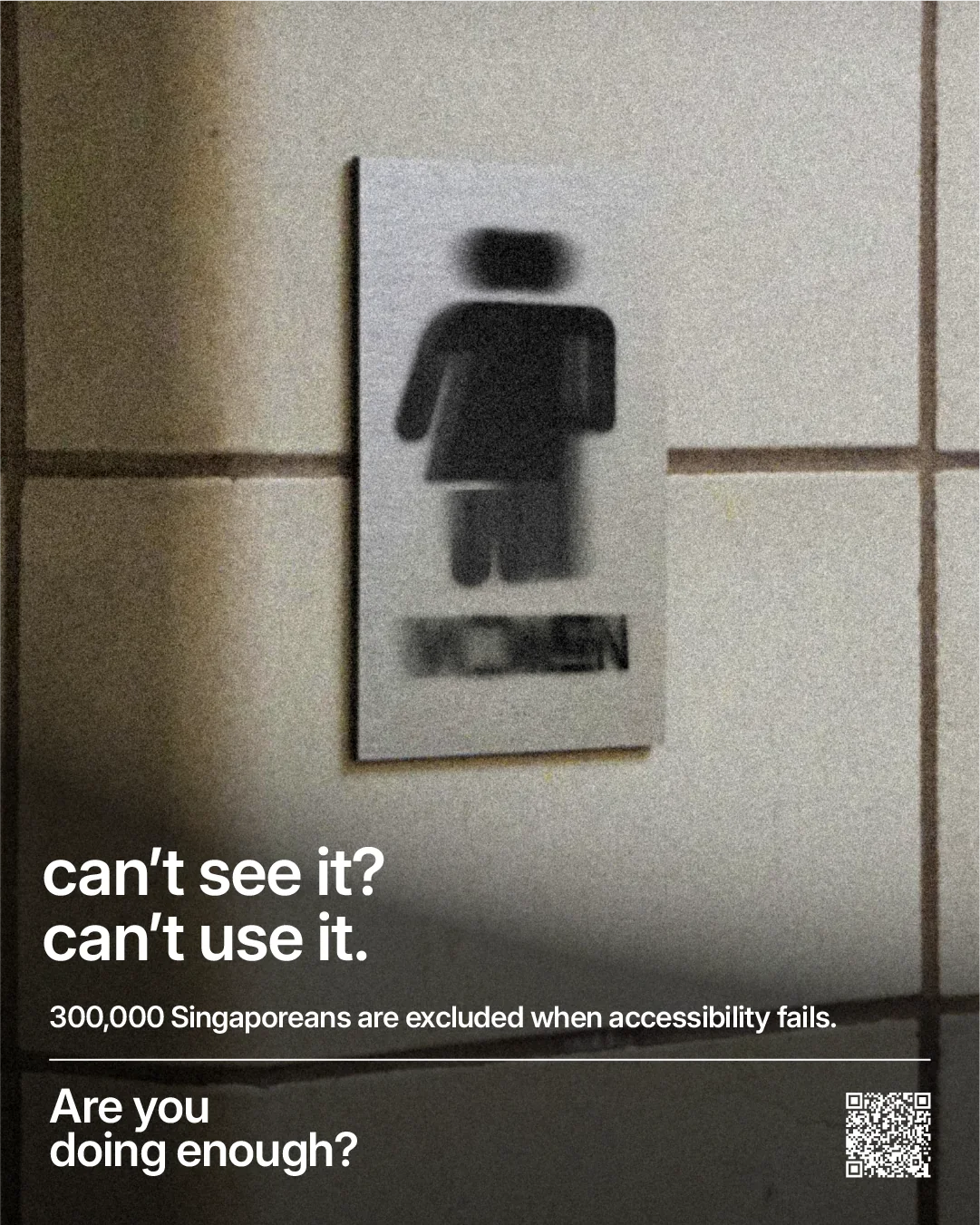
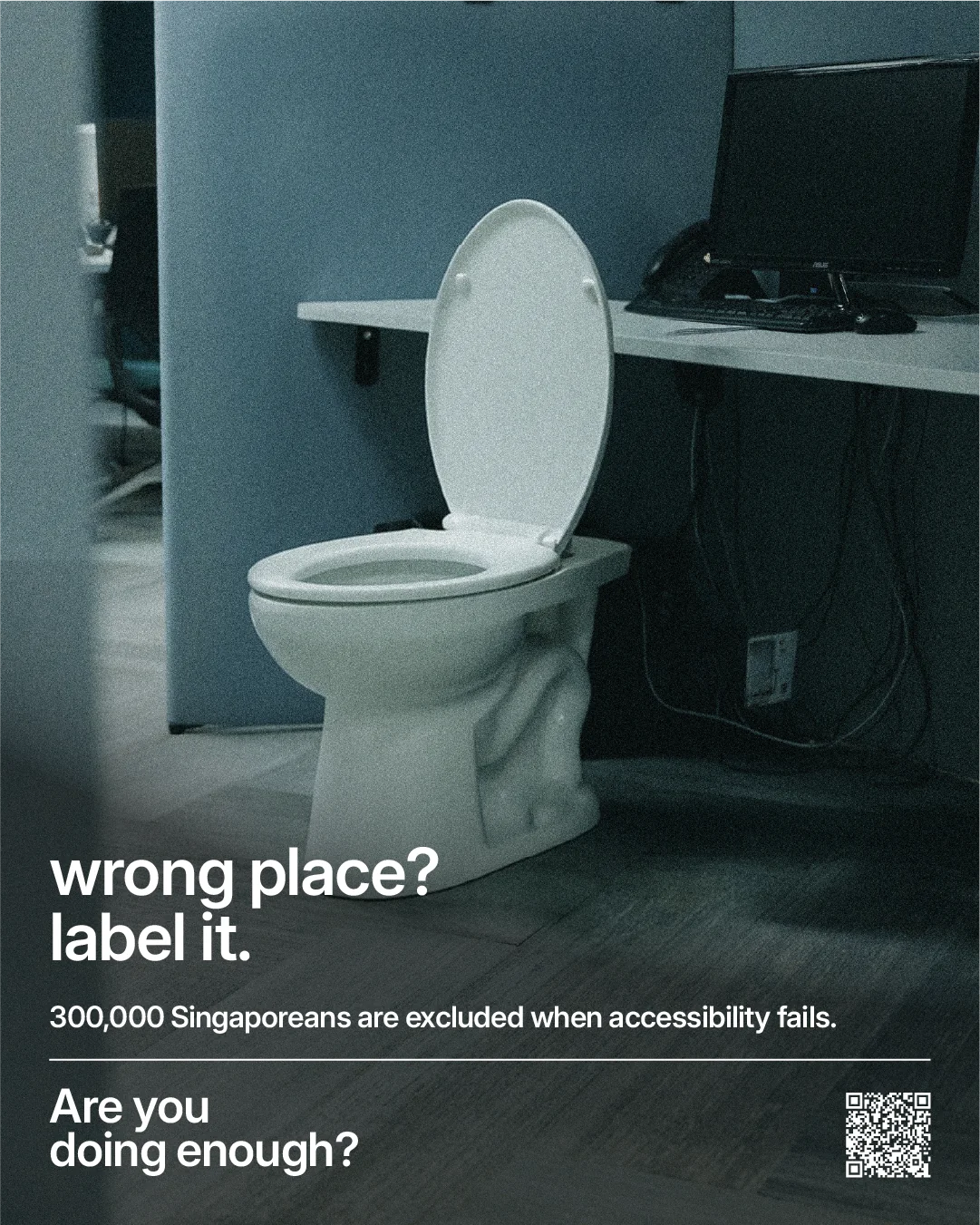
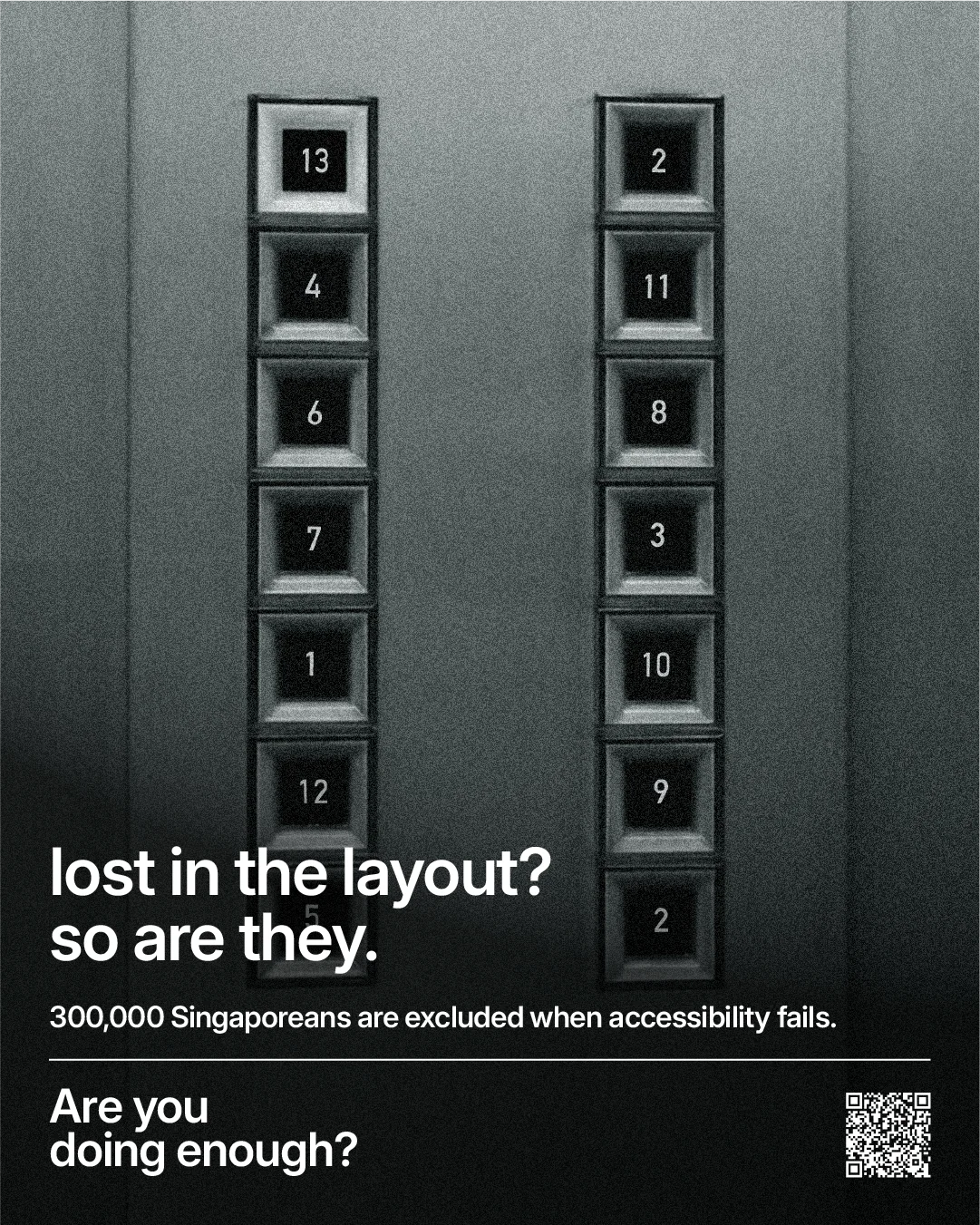
- 03Went bottom-up with inconvenience collaterals placed where staff already are, each one staging a digital accessibility failure as a physical one: a blurred toilet sign for poor contrast, a toilet installed beside an office desk for missing labels, lift buttons numbered out of sequence for broken heading structure, and an office window showing a filename instead of the view for missing alt text. Every poster closes with the same question, are you doing enough, over the line that 300,000 Singaporeans are excluded when accessibility fails.
- 04Went top-down by showing leaders their own site failing for people with disabilities beside a GovTech site already meeting WCAG 2.2. Not a lecture about standards, a mirror held up to something they own.
- 05Broke the work into five baby steps ordered by effort, each named for what it does rather than the standard it satisfies: Brighter for Everyone, Every Picture Speaks, Guide Every Click, Structure for Clarity and Focus for All.
- 06Designed a graduation path so that reaching a rating opens a route toward the Digital Services Awards, turning a one-off fix into a reason to keep going.
What I managed
- Audience research
- Persuasion strategy
- Campaign concepts
- Pitch & presentation
Won 1st place in the GovTech x NAFA collaboration, on a proposal that treated the problem as one of framing rather than knowledge.
- 1st place in the GovTech x NAFA collaboration.
- Reframed the brief from an awareness problem to a framing problem, which changed what the intervention had to be.
- Produced a strategy leaders could start on the same afternoon, rather than one requiring budget approval.

Have a project like this?
I’m available for project management and delivery work. Tell me what you’re building and let’s map it out.